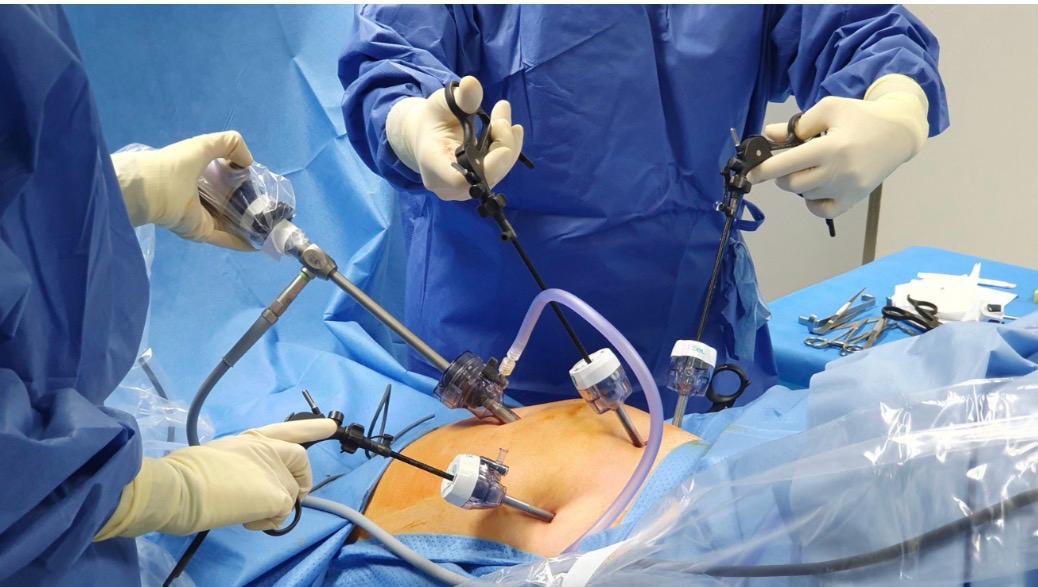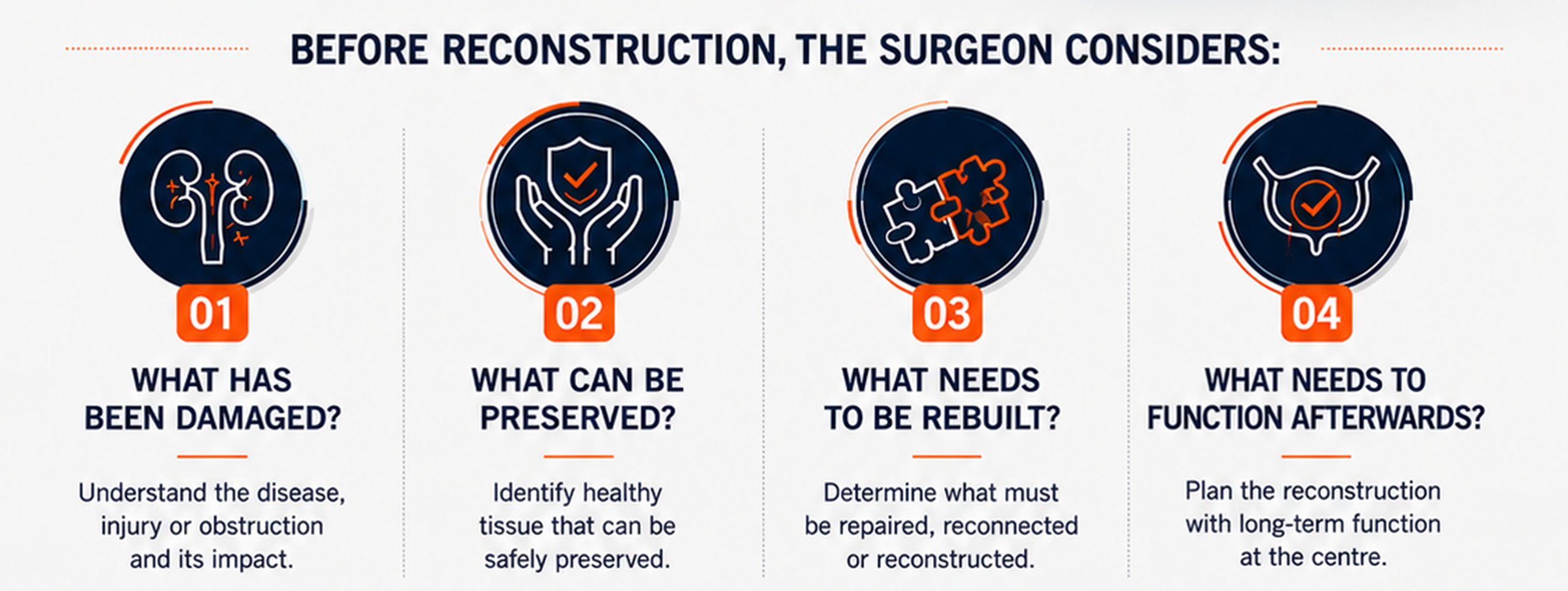

Your previous operation may be part of your medical history, but it can also be an important part of planning your next one. You may have undergone a Caesarean section, hysterectomy, bowel operation or another abdominal procedure many years ago. The surgery was successful, you recovered well, and life moved on. Then, years later, you […]
Your previous operation may be part of your medical history, but it can also be an important part of planning your next one.
You may have undergone a Caesarean section, hysterectomy, bowel operation or another abdominal procedure many years ago. The surgery was successful, you recovered well, and life moved on.
Then, years later, you need another operation. During your consultation, your surgeon asks detailed questions about your previous procedures, even those that seem unrelated to your current condition.
Why does an operation from years ago still matter? The answer often lies in how the body heals internally.
Following abdominal or pelvic surgery, scar tissue can develop beneath the surface. While this is a natural part of healing, it can sometimes change the relationships between organs and tissues. Understanding these changes is an important part of planning future surgery, particularly when delicate structures such as the bladder, ureters, kidneys and bowel are involved.
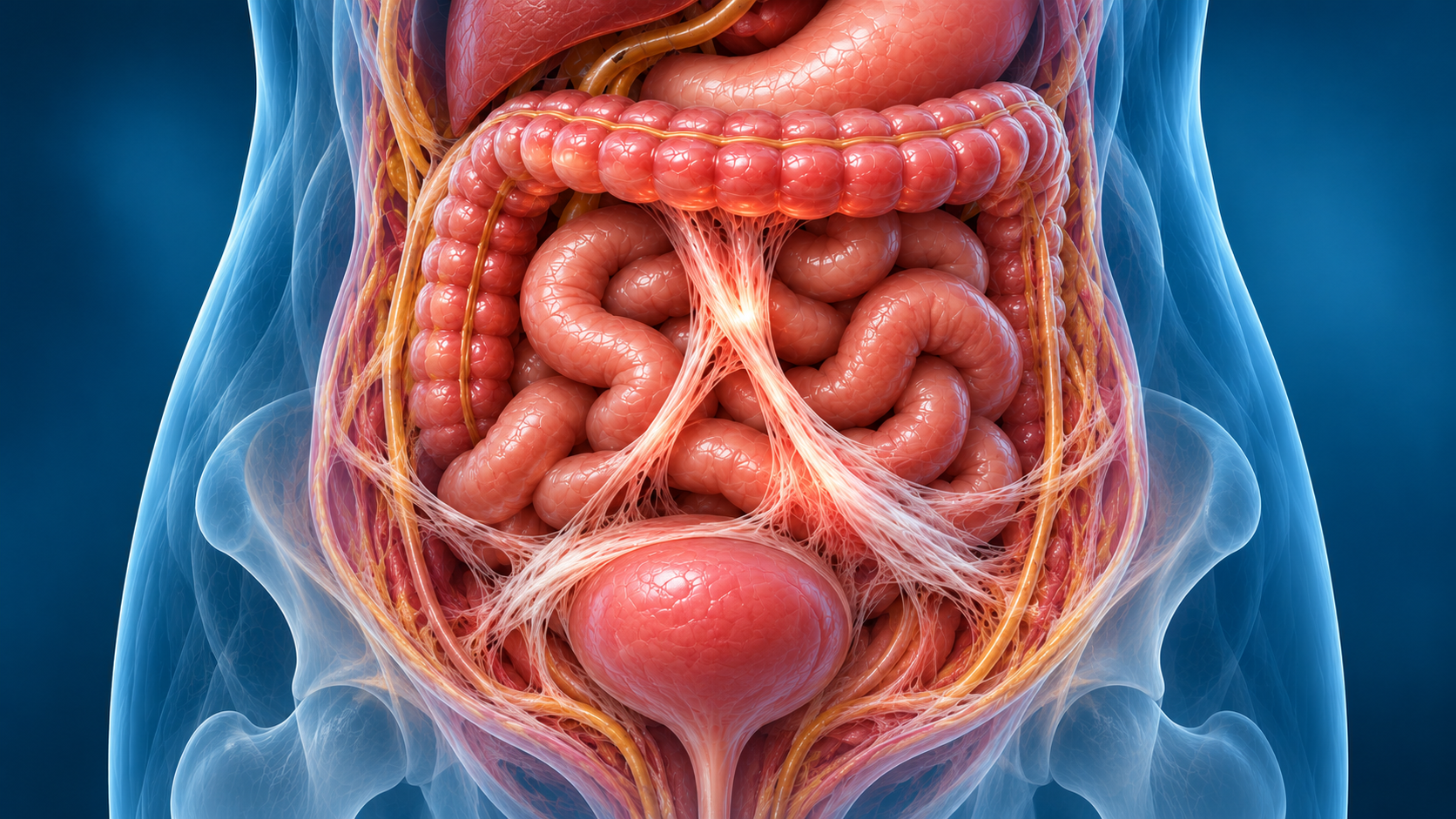
When we think about surgical scars, we usually picture the visible marks left on the skin. However, healing also takes place inside the body. Following surgery, injury or inflammation, the body produces tissue to repair the affected area. Sometimes, this healing process results in the formation of adhesions.
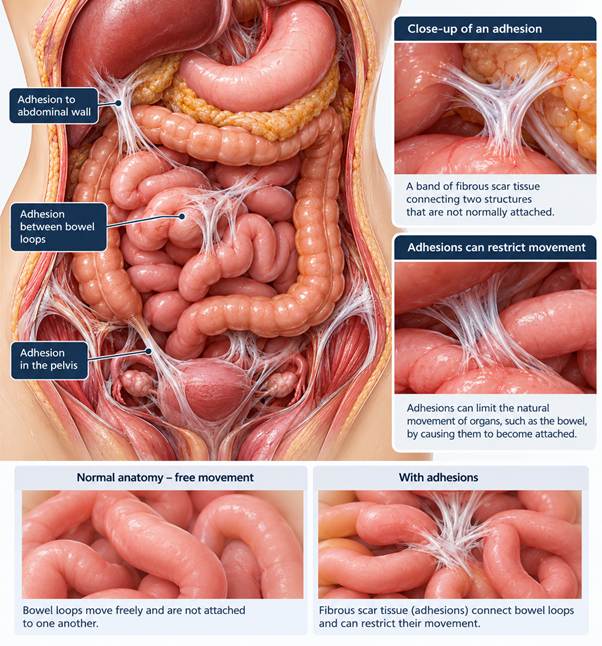
Adhesions are bands of fibrous scar tissue that develop between internal structures that would not normally be attached to one another. For example, an adhesion may connect a section of bowel to the abdominal wall or cause tissues within the pelvis to become attached.
Under normal circumstances, many abdominal and pelvic structures can move independently as the body changes position and organs perform their functions. Adhesions can restrict some of this natural movement.
Importantly, having adhesions does not necessarily mean something is wrong. Many people develop internal adhesions following abdominal surgery without ever experiencing symptoms. They may remain unaware of them throughout their lives.
However, if another operation becomes necessary, those adhesions may become relevant to surgical planning.
Almost any procedure involving the abdominal cavity or pelvis can potentially lead to internal adhesions.
Examples include:
The likelihood and extent of adhesions vary considerably between individuals. Factors such as the nature of the original operation, tissue inflammation, infection, previous complications and the body’s healing response can influence their development.
It is also important to understand that the number of previous operations does not tell the entire story. A person who has undergone several uncomplicated procedures may have a different surgical situation from someone who experienced significant inflammation or complications during a single operation.
This is why surgeons consider the details of a patient’s surgical history rather than simply counting previous procedures.
Surgery relies on a detailed understanding of anatomy. Within the abdomen and pelvis, organs, blood vessels, nerves and other structures occupy closely related spaces. Surgeons use these anatomical relationships to identify structures and work safely around them.
Previous surgery can sometimes alter those relationships. Adhesions may cause tissues to become attached, restrict the movement of organs or make the natural spaces between structures more difficult to identify.
In urological surgery, this is particularly relevant because the urinary system lies close to several other important structures. For example, the bladder is situated within the pelvis, where previous gynaecological or colorectal surgery may have altered surrounding tissues. The ureters, which carry urine from the kidneys to the bladder, also pass through areas where previous inflammation or surgery may have occurred.
When adhesions are present, the surgeon may need to carefully separate tissues before reaching the area requiring treatment. This can require additional time, altered surgical access or a different operative approach.
However, previous surgery does not automatically mean that another operation will be dangerous, unsuccessful or impossible. It means that the surgical team needs to consider whether the anatomy may have changed and plan accordingly.
Patients often assume that a CT scan, MRI or ultrasound will reveal everything a surgeon needs to know before an operation. Although medical imaging is extremely valuable, it has limitations.
Routine scans do not always show adhesions directly. In some situations, imaging may reveal changes associated with adhesions or complications they have caused, but ordinary adhesions can remain difficult to identify.
Consequently, a scan that appears normal does not necessarily mean that internal scar tissue is absent. This is one reason why your medical history is so important.
A previous operation report may provide details about the procedure, the structures involved, any unusual anatomical findings and complications encountered. These records can sometimes offer information that imaging alone cannot provide.
For patients undergoing further abdominal, pelvic or urological surgery, bringing previous surgical records to a consultation can therefore be extremely helpful.
Planning surgery after a previous abdominal or pelvic operation involves more than deciding which procedure is required. It also involves understanding the safest way to reach the area that needs treatment.
Several considerations may influence this process.
Such decisions are made according to the findings and circumstances of the individual procedure.
Good surgical planning is not simply about performing an operation. It is about anticipating challenges and being prepared to respond appropriately.
Not necessarily. Because many adhesions cause no symptoms or complications, they do not automatically require treatment.
In certain circumstances, however, adhesions may contribute to problems such as bowel obstruction or interfere with an operation that needs to be performed. When clinically indicated, a surgeon may carefully divide adhesions in a procedure known as adhesiolysis.
However, separating adhesions carries risks, including injury to surrounding structures, and surgery itself can lead to the formation of new adhesions. For this reason, adhesions are not routinely removed simply because they may be present.
It is also important not to assume that persistent abdominal or pelvic pain is always caused by adhesions. Pain can have several possible causes and requires appropriate assessment.
One of the most useful things a patient can do is provide a complete surgical history. Before your consultation, try to gather information about:
You can also ask your surgeon whether your previous procedures might affect the planned operation, whether additional investigations are necessary and what alternative approaches may be considered.
These conversations help patients understand their treatment options and participate more confidently in decisions about their care.
An operation performed many years ago can still influence the anatomy encountered during future surgery. Internal scar tissue does not necessarily cause symptoms, and previous operations do not automatically prevent successful treatment. Nevertheless, understanding how the body may have changed is an important part of making informed surgical decisions.
For patients requiring complex urological or reconstructive procedures, careful assessment of previous surgery, current anatomy and available treatment options helps guide an individualised surgical plan.
The goal is not simply to choose a surgical technique, but to choose an appropriate approach for the patient and the circumstances.
If you have undergone previous abdominal or pelvic surgery and now require assessment or treatment for a urological condition, a detailed review of your medical and surgical history can help guide the next steps.
Contact Dr MC Conradie’s practice to arrange a specialist consultation.Medical disclaimer: This article provides general educational information and is not a substitute for individual medical advice. Surgical decisions depend on your diagnosis, medical history and clinical assessment.