
When Previous Surgery Creates New Challenges For many women, pelvic mesh surgery has provided effective treatment for conditions such as urinary incontinence and pelvic organ prolapse. However, like any surgical intervention, complications may occur, sometimes months or even years after the original procedure. One of these complications is mesh erosion. Although uncommon, mesh erosion can […]
When Previous Surgery Creates New Challenges
For many women, pelvic mesh surgery has provided effective treatment for conditions such as urinary incontinence and pelvic organ prolapse. However, like any surgical intervention, complications may occur, sometimes months or even years after the original procedure.
One of these complications is mesh erosion.
Although uncommon, mesh erosion can create significant symptoms and often presents a unique reconstructive challenge. Managing these cases requires far more than simply removing mesh. Successful treatment depends on understanding pelvic anatomy, tissue healing, and restoring normal urinary and vaginal function.
What Is Mesh Erosion?
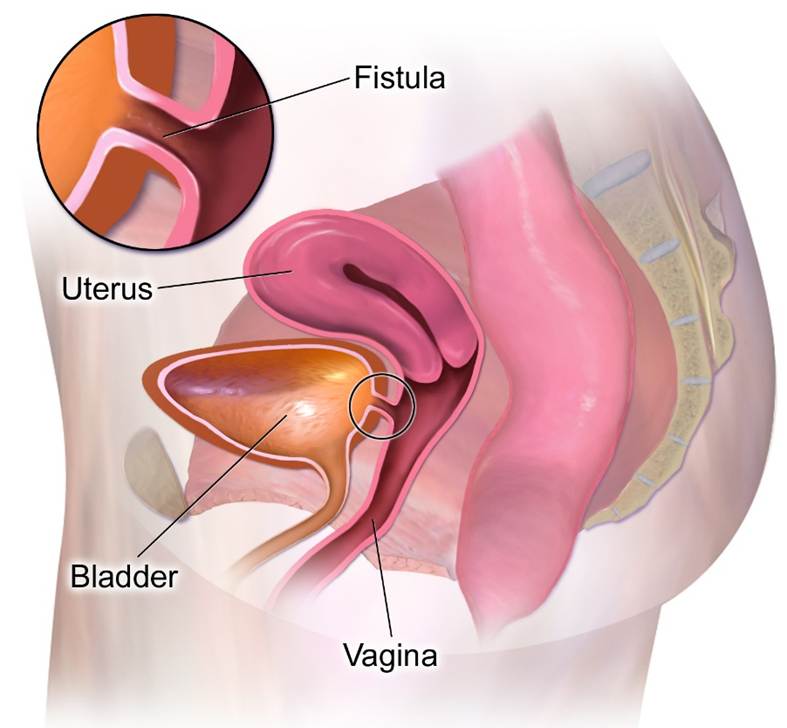
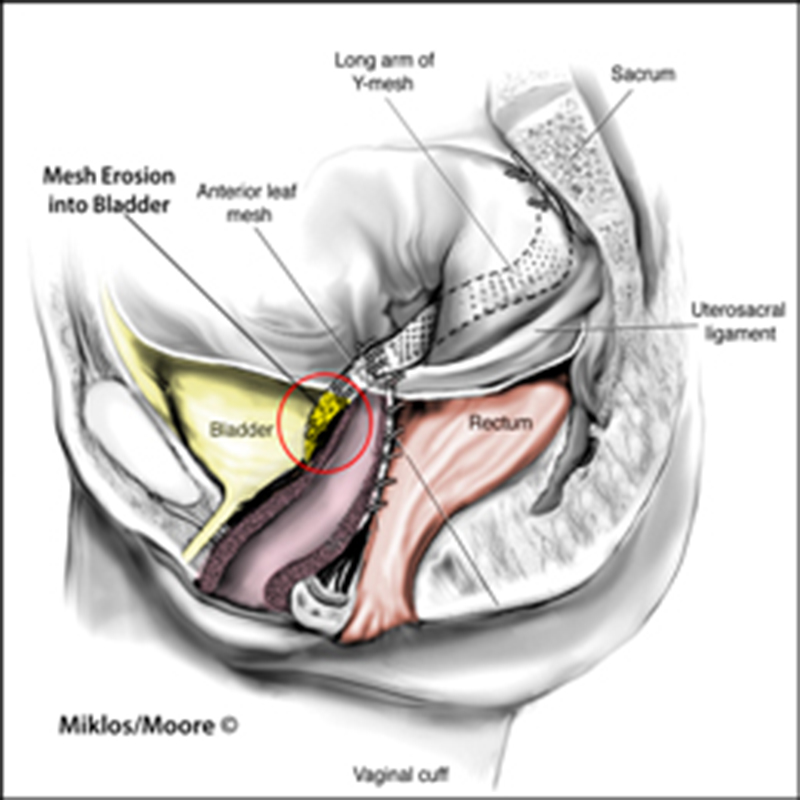
Mesh erosion, sometimes referred to as mesh exposure or extrusion, occurs when implanted surgical mesh gradually wears through the surrounding tissue. Over time, this process can cause the mesh to become exposed within the vagina or, in more complex cases, extend into nearby structures such as the bladder or urethra.
As the mesh erodes through tissue, patients may develop symptoms including pain, bleeding, recurrent infections, urinary symptoms, or discomfort during intercourse.
Depending on the location and extent of the erosion, the mesh may involve:
Not all mesh complications are the same, and no two patients present in exactly the same way. The severity of symptoms and the complexity of treatment depend on the extent of tissue involvement, the condition of the surrounding tissues, and previous surgical history.
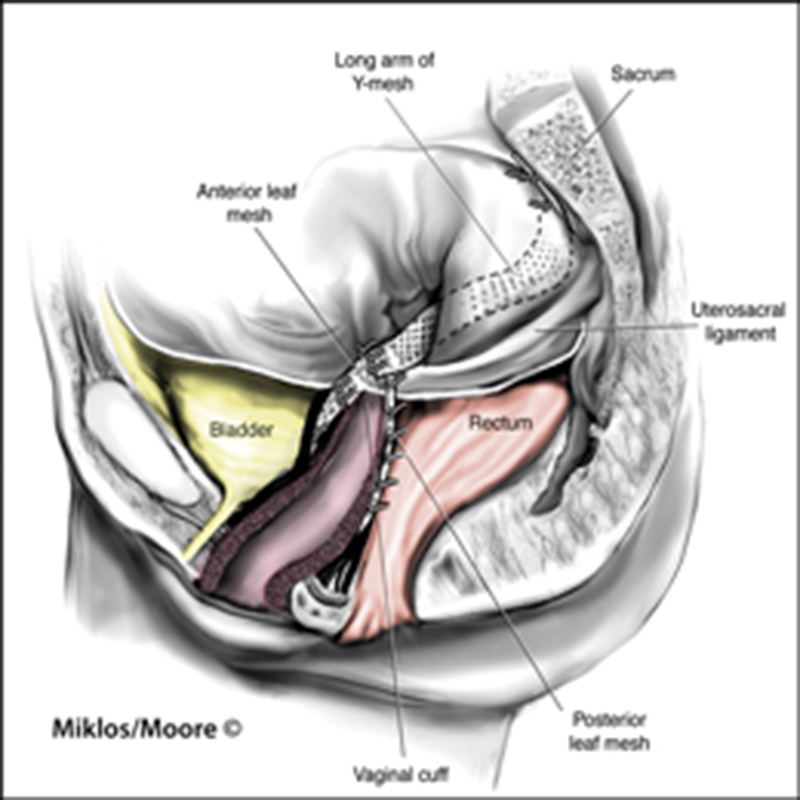
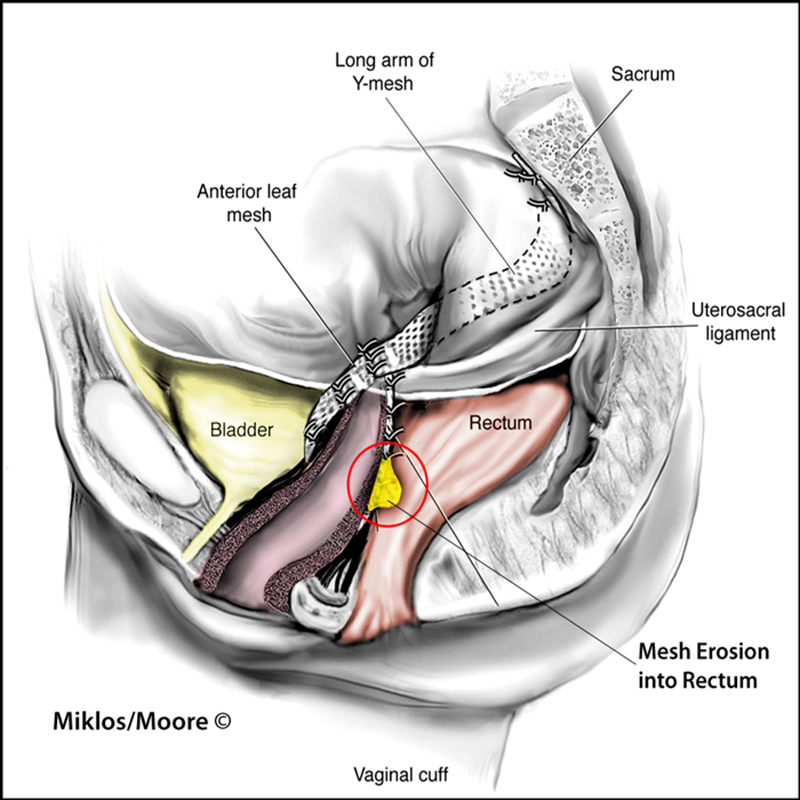
Image Source: International Center for Laparoscopic Urogynecology, https://www.meshsurgeons.com/colpopexy-mesh-erosion-bladder-rectum.php )
Why Does Mesh Erosion Occur?
Mesh erosion is usually the result of multiple factors rather than a single cause.
Contributing factors may include:
In many cases, the original surgery may have been performed years earlier, making it difficult for patients to connect new symptoms to a previous procedure.
Symptoms May Appear Long After Surgery
One of the challenges of mesh erosion is that symptoms may develop gradually and are often unexpected.
Women may experience:
Because symptoms may develop long after the initial surgery, diagnosis is sometimes delayed. This highlights the importance of specialist evaluation in women with persistent symptoms and a history of previous pelvic mesh procedures.
Mesh Erosion Is More Than Simply Removing Mesh
The treatment of mesh erosion is rarely as straightforward as removing the exposed material.
Previous surgery often changes:
As a result, reconstruction must focus not only on removing problematic mesh, but also on preserving surrounding structures and restoring normal function.
In some cases, surgery may involve:
The ultimate goal is to restore comfort, function, and quality of life while minimising the risk of further complications.
The Importance of Restoring Function
The objective of surgery is not simply to remove a complication. It is to restore normal anatomy and preserve the functions that matter most.
This may include:
For many women, successful reconstruction represents far more than the correction of a physical problem. It represents the restoration of confidence, comfort, and normal daily living.
Dr MC Conradie’s Role in Complex Pelvic Reconstruction
As a specialist in minimally invasive and reconstructive urological surgery, Dr MC Conradie manages complex pelvic conditions that often require advanced reconstructive principles and meticulous surgical planning.
This includes conditions such as:
These cases demand a thorough understanding of pelvic anatomy, tissue healing, and functional restoration. Because in reconstructive surgery, the goal is not simply to remove the problem. The goal is to restore anatomy, preserve function, and provide patients with durable long-term outcomes.
Mesh erosion represents one of the more challenging areas of pelvic reconstruction. Successful treatment depends not only on addressing the complication itself, but also on understanding how previous surgery has altered anatomy and how best to create an environment for healing.
For patients, treatment is about far more than removing mesh. It is about restoring comfort, confidence, and quality of life. And in complex reconstructive surgery, restoration is always the ultimate objective.