


The adrenal glands may be small, but their role in maintaining the body’s balance is profound. Nestled just above the kidneys, these triangular glands produce vital hormones such as cortisol, aldosterone, and adrenaline — all essential for regulating blood pressure, metabolism, and stress response. When an abnormal growth develops on an adrenal gland, it can […]

The adrenal glands may be small, but their role in maintaining the body’s balance is profound. Nestled just above the kidneys, these triangular glands produce vital hormones such as cortisol, aldosterone, and adrenaline — all essential for regulating blood pressure, metabolism, and stress response.
When an abnormal growth develops on an adrenal gland, it can disrupt this delicate hormonal balance, leading to symptoms such as high blood pressure, fatigue, unexplained weight changes, or anxiety. In such cases, surgical removal of the affected gland — a procedure known as an adrenalectomy — may be required.
Today, laparoscopic adrenalectomy has become the preferred method for most adrenal tumours, offering patients a safer, less invasive alternative to traditional open surgery.
Understanding When Surgery Is Needed
Adrenal tumours may be either functional (hormone-producing) or non-functional. The decision to operate depends on the size of the tumour, the hormones it produces, and the potential risk of malignancy.
Common conditions that may require adrenalectomy include:
Early detection and appropriate referral to a specialist surgeon are essential for the best outcomes.
Pheochromocytoma: A Life-Threatening Adrenal Condition
Among the conditions that require adrenal surgery, pheochromocytoma is one of the most critical. This rare, usually benign tumour arises from the adrenal medulla — the inner part of the adrenal gland responsible for producing adrenaline and noradrenaline. When a pheochromocytoma develops, it causes these hormones to be secreted in excess, leading to dangerous surges in blood pressure and severe cardiovascular strain.
Causes and Triggers
While some pheochromocytomas occur sporadically, others are associated with inherited syndromes such as Multiple Endocrine Neoplasia (MEN type 2), Von Hippel-Lindau disease, or Neurofibromatosis type 1.
Common triggers that can provoke severe episodes of hypertension include:
Because of these unpredictable hormonal surges, pheochromocytoma is considered potentially life-threatening and requires careful preoperative preparation and expert surgical management.
Symptoms to Look Out For
Patients may experience:
Diagnosis is usually made by an endocrinologist, who performs hormonal blood and urine tests, followed by CT or MRI imaging to locate the tumour.
Laparoscopic Adrenalectomy: The Specialist Solution
Once diagnosed, surgical removal of the adrenal gland is the definitive treatment. Because these tumours are highly vascular and hormonally active, surgery carries unique risks — making specialist expertise absolutely vital.
Dr MC Conradie is one of South Africa’s most experienced laparoscopic surgeons, specialising in minimally invasive treatments. Her advanced training allows for precise dissection and vascular control, reducing intraoperative complications and ensuring patient safety.
The laparoscopic approach offers major advantages for pheochromocytoma patients:
This meticulous, organ-focused technique ensures optimal outcomes for a condition that demands both surgical precision and careful hormonal management.
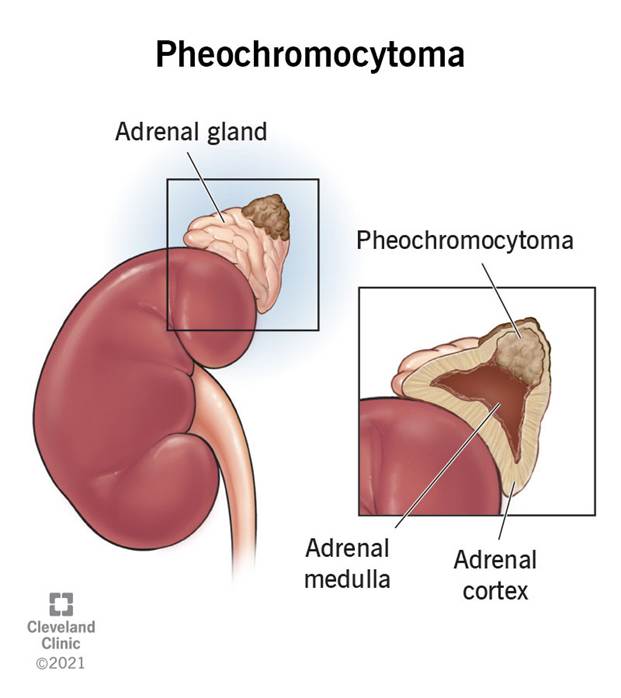
[Image Source: Cleveland Clinic, link: https://my.clevelandclinic.org/health/diseases/23373-pheochromocytoma )
Recovery and Expected Outcomes
Most patients recover rapidly following a laparoscopic adrenalectomy. Hospital stays are short, typically one to two days, and many individuals return to normal activities within two weeks.
Pain and discomfort are minimal compared to open surgery, and the small incisions heal quickly. For patients with hormone-secreting tumours, symptoms such as high blood pressure or hormonal imbalance often improve dramatically within days to weeks.
Regular follow-up ensures that hormone levels stabilise and that long-term recovery remains smooth.
Specialist Expertise Matters
Adrenal surgery requires more than just technical skill — it demands a deep understanding of anatomy, endocrinology, and laparoscopic precision.
Dr MC Conradie brings extensive experience in minimally invasive urological surgery, performing complex laparoscopic procedures with a focus on patient safety, accuracy, and optimal recovery. Her commitment to excellence, ongoing education, and precision care ensures that every patient receives world-class treatment with personalised attention.
When it comes to adrenal tumours, experience truly makes the difference.
Restoring Balance and Health
A laparoscopic adrenalectomy is more than a surgical procedure — it’s a path to restoring balance in the body. By removing the source of hormonal disruption through minimally invasive means, patients experience renewed energy, stable blood pressure, and improved overall well-being. With Dr MC Conradie’s expertise, patients can face adrenal surgery with confidence — knowing they are receiving international-standard urological care delivered with precision, care, and compassion.

