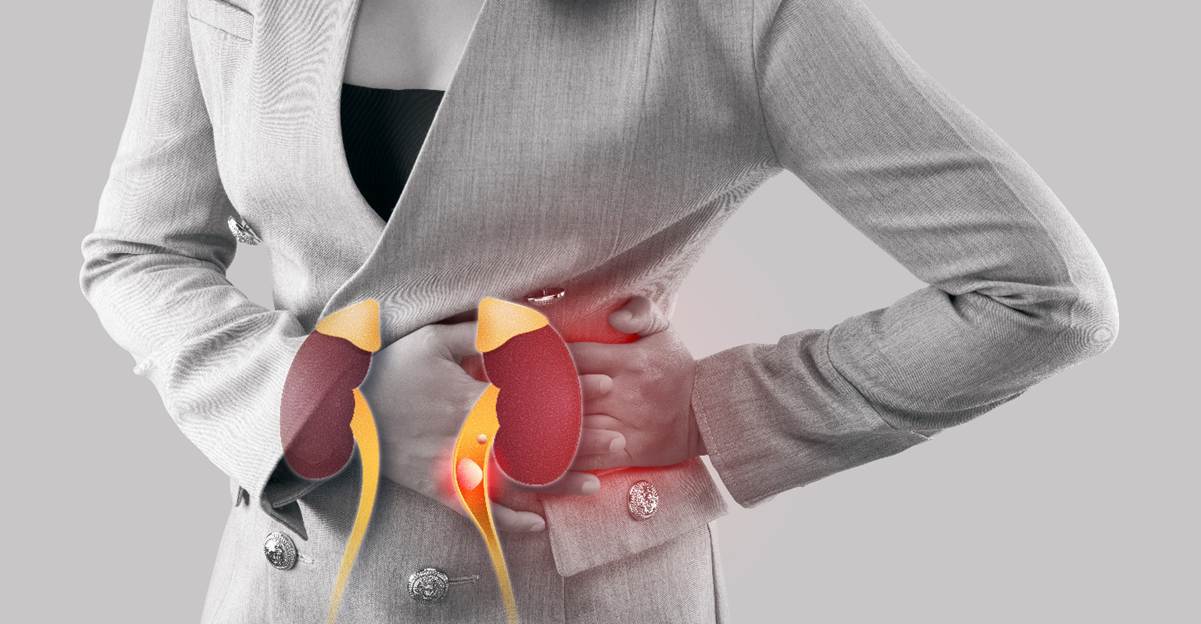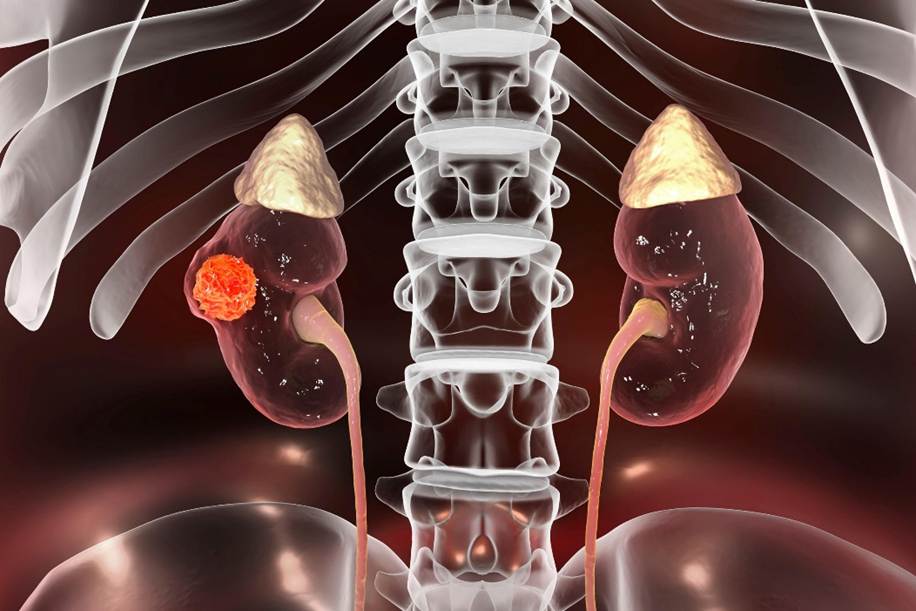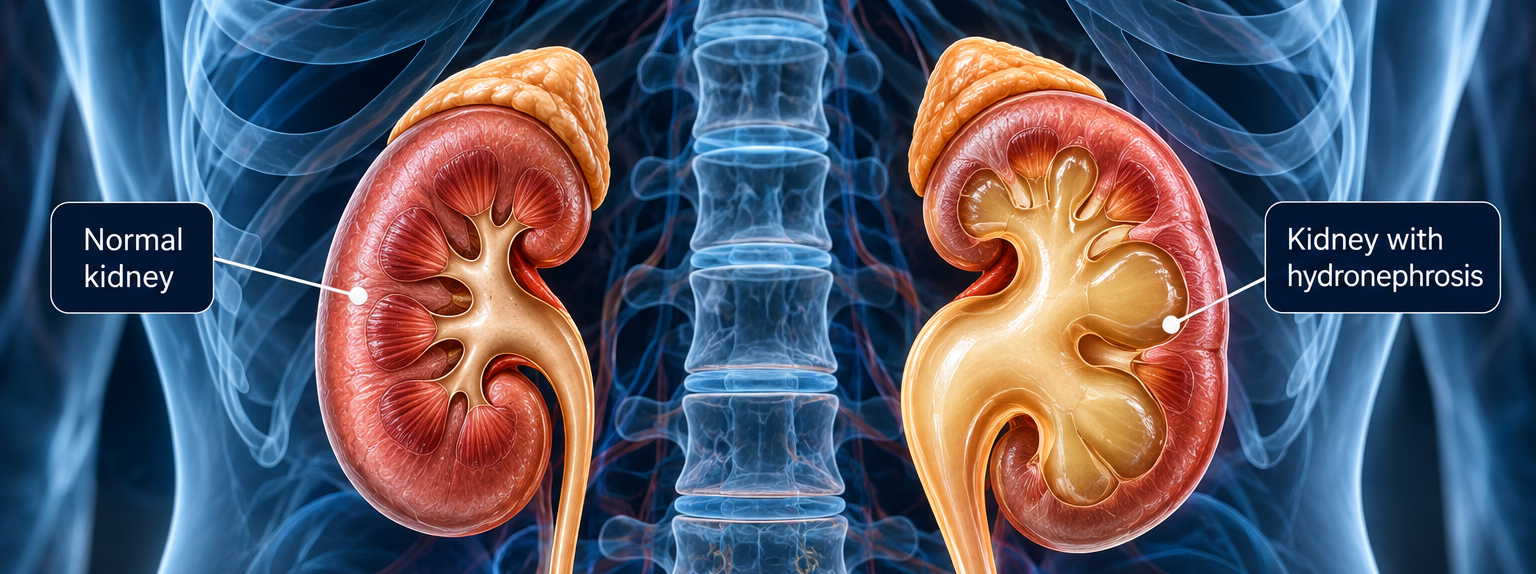

Not all kidney tumours are created equal. While advances in imaging, diagnostics, and minimally invasive surgery have transformed modern urology, they have also revealed a more complex truth: some cases cannot be solved by technical ability alone. They require judgement, responsibility, and, above all, surgical courage. For patients facing a kidney tumour, the challenge is […]

Not all kidney tumours are created equal. While advances in imaging, diagnostics, and minimally invasive surgery have transformed modern urology, they have also revealed a more complex truth: some cases cannot be solved by technical ability alone. They require judgement, responsibility, and, above all, surgical courage.
For patients facing a kidney tumour, the challenge is not simply whether surgery is possible. The real question is whether the right decision is being made for their future.
When Expertise Is Not Enough
Many kidney tumours fall neatly within established treatment pathways. They are well positioned, technically accessible, and can be managed using standard approaches. But others sit in a far more challenging space — large tumours, tumours close to major blood vessels, tumours affecting patients with a single kidney or reduced kidney function, or tumours that others have already declined to treat.
In these cases, the limiting factor is rarely technology. It is decision-making.
Surgical courage does not mean ignoring risk. It means understanding risk fully — and still choosing the option that offers the patient the best long-term outcome.
Skill vs Courage: Understanding the Difference
Surgical skill is essential. It is measurable, teachable, and honed through years of training and experience. But skill alone does not guide the most difficult cases.
Surgical courage is different. It is the willingness to take responsibility for complex decisions, to step into uncertainty with preparation rather than fear, and to place the patient’s long-term wellbeing above short-term convenience.
Courage is not recklessness. It is careful planning, meticulous execution, and accountability for every outcome — good or bad.
What Makes Certain Kidney Tumours High-Risk
Some kidney tumours present challenges that fall outside routine practice. These include tumours that are large, centrally located, or closely associated with vital structures such as major blood vessels or the kidney’s collecting system. Others occur in patients with limited renal reserve, where removing an entire kidney could lead to lifelong consequences.
In these situations, treatment decisions are rarely black and white. Algorithms and guidelines offer direction, but they cannot replace experience or judgement. This is where advanced urological oncology moves beyond checklists and into careful, individualised care.
Why Some Surgeons Say “No”
When confronted with complex kidney tumours, some surgeons recommend radical removal or decline surgery altogether. Often, this is not due to a lack of care — but due to the genuine concern about complications, limited exposure to advanced reconstructive techniques, or the pressure to avoid high-risk outcomes.
While saying no is sometimes appropriate, defaulting to the safest option for the surgeon can come at a cost to the patient. Removing a kidney may solve the immediate problem, but it can significantly impact long-term health, increasing the risk of chronic kidney disease and cardiovascular complications.
When Courage Means Preserving, Not Removing
In experienced hands, many complex kidney tumours can be managed with organ-preserving surgery. Partial nephrectomy and advanced minimally invasive techniques allow surgeons to remove the tumour while protecting healthy kidney tissue whenever possible.
These procedures often require longer operating times, advanced reconstruction, and a higher level of technical and mental endurance. But the reward is substantial: preserved kidney function, improved quality of life, and better long-term outcomes.
Choosing preservation over removal is not always the easier path — but it is often the right one.
True surgical courage includes restraint. Not every tumour should be operated on immediately, and not every patient benefits from aggressive intervention. Knowing when to pause, monitor, or pursue alternative strategies is just as important as knowing when to operate.
This balance reflects ethical leadership — prioritising patient wellbeing over procedural numbers or recognition.
Dr MC Conradie’s Approach: Responsibility Before Recognition
Dr MC Conradie’s work in urological oncology is grounded in one guiding principle: responsibility to the patient comes first. With extensive experience in advanced minimally invasive and reconstructive urology, she regularly assesses high-risk cases that have been declined or deemed too complex elsewhere.
Each case is approached individually, with careful planning, honest discussions, and a focus on protecting the patient’s future health — not just addressing the immediate diagnosis.
The goal is never to prove what is possible, but to determine what is right.
A Message to Patients and Referring Doctors
For patients who have been told their kidney tumour is too risky, that removal is the only option, or that nothing more can be done, a second expert opinion may change the conversation.
For referring doctors, complex cases deserve thoughtful evaluation by a specialist experienced in advanced urological oncology and organ-preserving strategies. Courageous surgery often begins with the courage to refer.
Experience That Makes Courage Possible
Surgical courage is not instinctive — it is built on decades of experience, technical mastery, and exposure to complex clinical cases. Over the course of her career, Dr MC Conradie has performed more than 5,000 laparoscopic kidney procedures, including laparoscopic radical nephrectomy, laparoscopic partial nephrectomy, and advanced reconstructive procedures for renal pathology. This level of experience provides the technical depth required to manage highly complex tumours while protecting kidney function wherever possible.
Her work has also included managing exceptional cases, such as the laparoscopic removal of one of the largest documented kidney tumours of its kind, demonstrating that even extreme cases can sometimes still be approached using minimally invasive techniques when carefully planned and performed by an experienced surgeon.
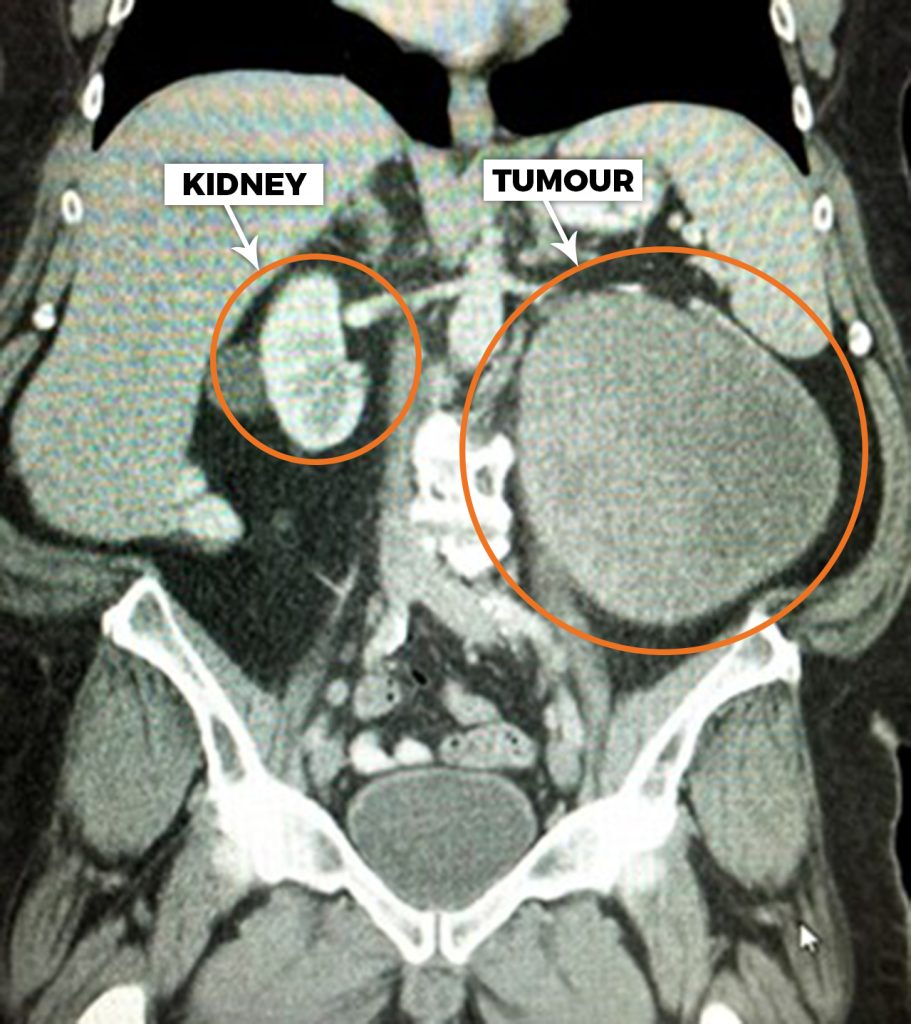
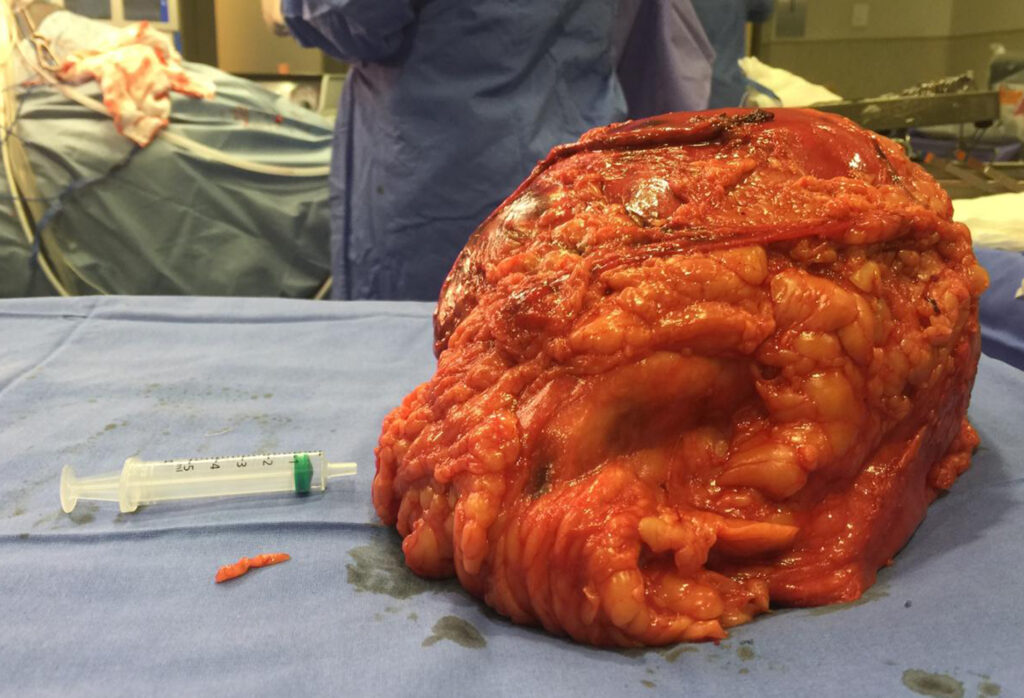
Laparoscopic removal of one of the largest documented kidney tumours of its kind.
Dr Conradie has also been responsible for significant surgical milestones in South Africa. She performed the first robotic partial nephrectomy for kidney cancer in South Africa, demonstrating how advanced robotic technology can be used to remove tumours while preserving healthy kidney tissue.
She was also the first surgeon in Africa to perform kidney removal using a Natural Orifice Transluminal Endoscopic Surgery (NOTES) approach, where the kidney was removed through the vaginal canal rather than through a traditional abdominal incision. This highly specialised technique allows the organ to be extracted without creating an additional external incision, further reducing surgical trauma and patient recovery as well as optimising aesthetic appearance of the wounds.

Medical Milestone – Dr MC Conradie did the first Transvaginal Laparoscopic Nephrectomy in Africa using the NOTES approach. [Image Source: European Urology, Link: https://www.europeanurology.com/article/S0302-2838(09)00953-1/abstract]
These experiences are not simply milestones. They represent the level of surgical exposure required to evaluate difficult cases, plan high-risk procedures responsibly, and make decisions where both the immediate surgery and the patient’s long-term health are at stake.
Protecting the Future, Not Just Fixing the Problem
Surgery is not about bravado or technical display. It is about carrying the weight of responsibility for another person’s life and future health.
Good surgery fixes the problem.
Great surgery protects what comes after. If you or your patient are facing a complex kidney tumour and need clarity on the best path forward, an experienced perspective can make all the difference.