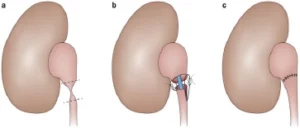
Ureteropelvic junction obstruction is a condition where blockage occurs at the junction where the ureter attaches to the kidney.
This results in decreased flow of urine down the ureter and an increase of fluid pressure inside the kidney.
If untreated, UPJ obstruction can lead to permanent loss of kidney function (kidney failure). Kidney stones or infection may occur in the affected kidney, even after treatment. For more information on kidney stones, which can also lead to UPJ obstruction, visit our Renal Stones page.
UPJ obstruction is often diagnosed during prenatal ultrasound, when the enlarged kidney is seen. For those that occur later or are not detected at birth, symptoms suggesting UPJ obstruction include hematuria (blood in the urine), urinary tract infection, kidney infection, kidney stones, and abdominal discomfort.
While the most common type results from a narrowing of the ureter as it forms in fetal development (usually because of an abnormality in the development of the muscle surrounding the UPJ), UPJ obstruction can also occur later in life and can be caused by other factors, including compression of the ureter by inflammation, kidney stones, scar tissue, abnormal blood vessels, or a tumor.
Diagnostic tests help to determine the degree of UPJ obstruction and whether surgery is necessary.